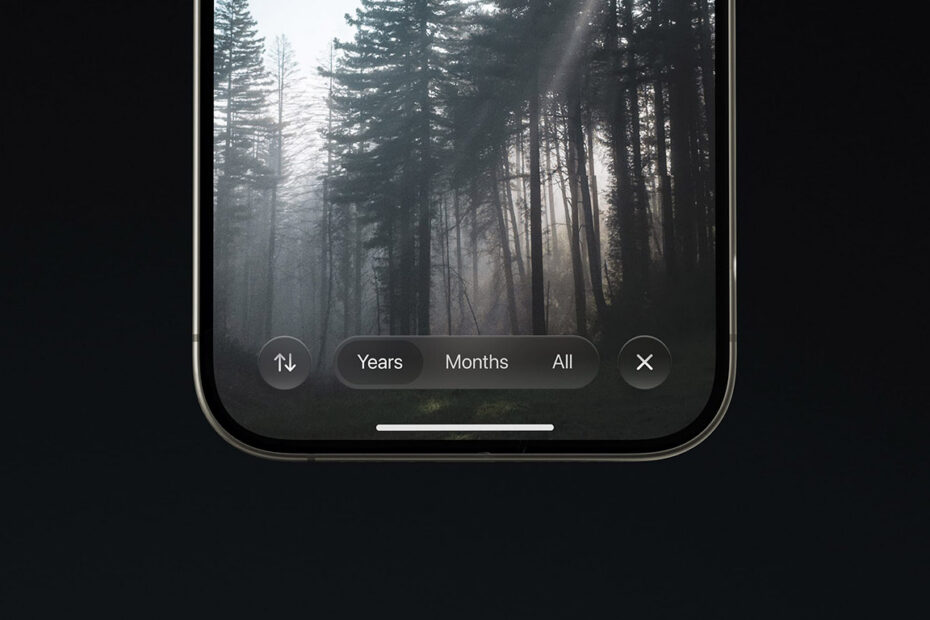

Talking about Apple personnel feels a bit inside baseball, which is why I rarely do it here. But I’m making an exception because Sebastiaan de With is rejoining Apple. If you’re thinking “Sebastiaan de Who?”, fair enough. He lacks the notoriety of Jony Ive, who revolutionized Apple’s hardware design. But this could nonetheless be a vital Apple hire, because de With got Liquid Glass right. And as you may have noticed if you upgraded to iOS 26, Apple very much didn’t.
We’re now two minor OS updates into the Liquid Glass era, and Apple device interfaces are still a mess. Input fields flicker as content scrolls beneath them. Animations break. Clarity and legibility feel like afterthoughts. Worse, for an interface Apple claimed was all about getting out of the way and putting content first, Liquid Glass constantly demands attention. Not good.

Those buttons at the bottom turn black after about a second, but… come on, Apple.
In June 2025, though, while Liquid Glass rumors were still swirling, de With came up with his own take: Living Glass. His post walks through iPhone interface history before exploring what de With calls the “age of physicality.” That section digs into how that essential quality of interface design in virtual spaces might translate to traditional devices.
At a glance – see one of his mockups at the top of this page – his concepts don’t look wildly different from Apple’s, but the underlying thinking is revealing. “A logical next step could be extending physicality to the entirety of the interface,” he says. “We do not have to go overboard in such treatments, but we can now have the interface inhabit a sense of tactile realism.”
Clearer thinking
We don’t have to go overboard. In other words, de With’s vision aligns with Apple’s goal of an interface that feels integrated with the device it lives on, but his final concepts are defined by restraint.
The glass in his work responds to its environment subtly, without undermining usability or legibility. His concepts use spatial hierarchy to gently guide attention – a sharp contrast to Apple’s sometimes comically over-the-top drop shadows, where buttons feel pressed against your eyeballs while everything else recedes into the distance.
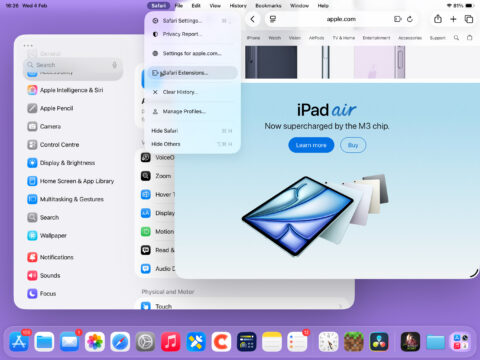
Liquid Glass continues to improve but still feels half-baked. Or, er, half-vitrified.
There’s much more – go read the blog – but it’s de With’s hiring that really matters. The Apple exec responsible for Liquid Glass – who notably had no background in user interface design – left Apple for Meta. His replacement, Stephen Lemay, is a long-time interaction and interface expert, known for precision, fine detail, and usability. And now, potentially working with him will be a designer who demonstrated the best implementation of Liquid Glass we’ve seen so far.
What does that mean for you? Nothing – yet. We don’t know where de With will land. Given his work on camera app Halide (read my interview about that here), it’s possible Apple snapped him up to refine and rethink Camera. But maybe – just maybe – his hire signals better things to come from Liquid Design – much-needed course correction in the coming months, followed by a more usable overhaul later in the year.
All this of course assumes people sufficiently senior at Apple – and across the design team as a whole – truly care enough about design to let those with taste and capability make meaningful changes. Time will tell.