


The latest entry in our classic app series reimagined astronomy in a way that was out of this world.

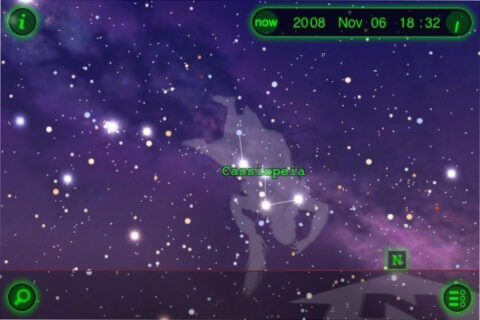
Star Walk in 2008.
What was Star Walk?
An astronomy app that let you explore the night sky, right from your iPhone.
Why was Star Walk a classic?
It combined ease of use with striking visuals, backed by features that helped you better understand what you were looking at.
Where is it now?
The original Star Walk (free + IAP) remains on the App Store, alongside Plus (free + IAP) and Pro ($3/£3 + IAP) editions of Star Walk 2.
Visit creators Vito Technology or the dedicated Star Walk 2 website for more information.

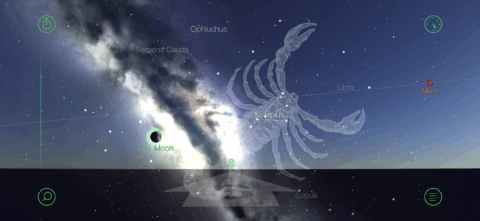
Star Walk in 2025.
Q&A: a brief history of Star Walk
We talk to Vito Technology’s Valeriy Banaev about the origins of Star Walk and how it redefined astronomy apps for smartphones.
Where did the idea of Star Walk come from?
Its origins trace back to AstroNavigator, a GPS-powered real-time sky map we created for Windows Mobile in 2006. It let users identify stars and constellations right from their device. A year later, the iPhone arrived and we saw an exciting opportunity in this new platform – but that meant rethinking and redesigning AstroNavigator. The result was Star Walk.

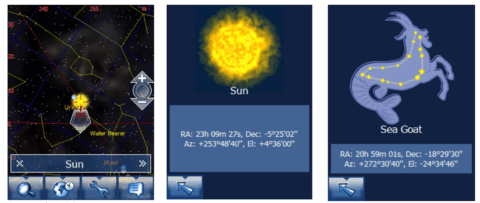
AstroNavigator.
Were you already fans of astronomy?
At the very beginning, we wouldn’t have called ourselves true fans, but developing our apps drew us deeper and deeper into the subject. We’ve learned a tremendous amount along the way and brought in employees with backgrounds in mathematics, physics, and astronomy to raise our level of professionalism.
What about iPhone made you think it would be a good platform for an astronomy app?
It was like a glimpse into the future. Its sleek, multitouch display was unlike anything else at the time. We immediately felt that an interactive star map could shine on this platform in a way that wasn’t possible before.
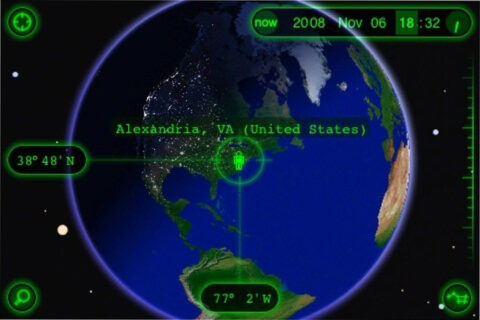
An early version of Star Walk.
What did you feel existing astronomy apps were missing?
Back then, most stargazing apps were clunky and uninspiring. Our aim was to create the best astronomy app on the market – one that made stargazing simple, intuitive, visually captivating, and accessible to anyone. Within eight months, Star Walk topped its category on the App Store.
What features did you consider essential from the start?
First, quick and effortless identification of any object in the sky. We wanted someone to be able to point their device at the sky and immediately know what they were looking at. Secondly, easy search. It was important that anyone could find a specific object they were curious about, be that a planet, star, or constellation.

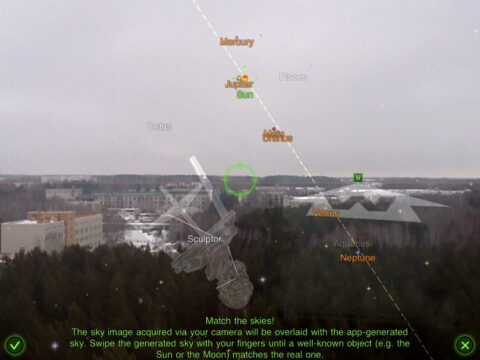
AR in Star Walk, circa 2011.
How did designing for Apple hardware influence your approach?
The touchscreen was a game-changer. Instead of using buttons and menus, interactions became intuitive gestures. That freedom shaped the core of Star Walk, letting you explore the sky by moving your phone as if it were a window to the universe.
As Apple’s hardware advanced, so did Star Walk. The iPhone’s built-in compass and gyroscope enabled us to introduce and improve key features, such as AR mode, which allowed the app to align perfectly with the night sky. Retina displays let us add high-res textures and display tens of thousands more objects on-screen at a time. Faster processors allowed 3D models of planets and satellites. And ARKit helped us increase the accuracy of AR mode.


Star Walk 2 in 2014.
How did Star Walk evolve, and why did you create Star Walk 2?
Over the years, Star Walk grew in both content and sophistication, shaped by user feedback and the rapid progress of mobile technology.
Initially, we focused mainly on enhancing usability and the overall experience, with improvements like night mode, adjusting the brightness of stars, smoother performance, better search, filtering stars by magnitude, toggling constellations, and adding bookmarks by date and time.
An early breakthrough was Star Spotter, which let you tap a compass icon to see the real-time sky above your exact location, which was further refined by the digital compass in the iPhone 3GS. Later, the gyroscope in the iPhone 4 provided the precision to make AR possible, bringing stargazing into a whole new dimension. In 2010, we added the stargazing guide, which displayed guiding arrows to lead you to a star or constellation.
These steps paved the way for Star Walk 2 in 2014, which reimagined the app with richer content, smoother navigation, and the 3D graphics we’d always envisioned.

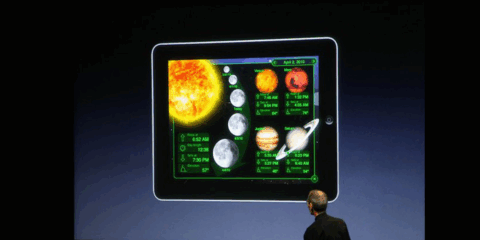
Star Walk at WWDC.
What’s been your biggest challenge – and your favorite high point?
Keeping up with technology while staying true to our vision is a challenge. Devices, platforms, and user expectations evolve rapidly. Making sure Star Walk remained fresh, relevant, and ahead of the curve pushed us to constantly innovate.
As for the high point, one moment stands above the rest. In 2010, at our very first Apple Worldwide Developers Conference, Star Walk for iPad won an Apple Design Award. It remains one of our proudest milestones.
What’s the secret to Star Walk’s longevity?
Probably its accessibility and visual appeal. From the moment you open the app, it’s easy to dive in and start exploring. At the same time, the experience is enriched by shimmering, ‘glassy’ constellations that make stargazing feel magical.
Just as important is educational value. You’re kept informed about upcoming celestial events, so you never miss what’s happening in the sky. And there’s a wealth of knowledge about celestial bodies, along with interactive content like space quizzes. Together, these make learning about astronomy effortless and fun.

Star Walk 2 in 2025.
Finally, what are your favorite recent features – and what’s next for Star Walk?
We recently introduced Planet Walk mode, making it easier to locate planets and track planetary alignments, also known as ‘planetary parades.’
Right now, we’re working on a major redesign of Sky Live, with more detailed astronomical data about the sun, moon, and planets, such as elongation, culmination, and twilight times. And we’re introducing brand-new Sky Charts, so users can generate star maps that capture the unique alignment of the sky at a specific place and date, like a birthday, wedding, or other meaningful moment.
Looking ahead, our mission remains the same: to keep blending science, technology, and beauty in a way that makes exploring the universe easy and inspiring.