

Setapp is like Netflix for apps. At least if you own a Mac. Pay $10 per month and you gain access to hundreds of apps to install. The collection is varied and genuinely useful, ranging from simple yet indispensable utilities to production heavy-hitters that elsewhere often cost close to $10 per month each. You don’t need to install many of those before Setapp starts to feel like a bargain.

Setapp for Mac.
This kind of service is possible on the Mac because there are so few restrictions on what you can install. The same can’t be said for the iPhone, where Apple has maintained an effective monopoly since day one. Beyond the App Store (and the limited world of web apps), there is no official way to install software on your iPhone. Unless you live in the EU or Japan, that is.
Those regions have started waking up to Apple’s monopoly over app distribution. (Others are following suit.) They are forcing competition and thereby opening the door to third-party app stores. This also creates space for new kinds of apps, since Apple blocks entire categories from its own store. However, demanding Apple make a hairline crack in the fortifications of its walled garden is one thing. Getting it to actually open the gate is another.
Apple has done everything it can to push back. It’s argued that alternative app stores undermine iPhone security. It’s claimed they can expose children to harmful apps. And it’s resisted every attempt to loosen its grip on distribution, with decisions that, to many, look a lot like malicious compliance. That approach may now have claimed its first casualty.
Before regulators stepped in, Setapp allowed Mac subscribers to unlock iPhone versions of their apps, enabling cross-platform workflows. But following the EU’s ruling, the company launched Setapp Mobile, a version squarely aimed at people who only own an iPhone. And unlike the App Store, it was properly curated, featuring hand-picked, high-quality apps, with no ads and no in-app purchases.
Store wars
I say “was” because Setapp recently announced Setapp Mobile’s closure, which it put down to “still-evolving and complex business terms that don’t fit Setapp’s current business model.” Read into that what you will, but it neatly captures the current reality: a market that may technically comply with the law but that’s doing its best to hollow out its intent and sidestep its spirit.

AltStore has also been frustrated by Apple.
Setapp isn’t alone. Other third-party operators have struggled with Apple’s tactics. AltStore recently highlighted an Apple press release that attacked the EU’s legislation and AltStore itself for enabling pornography apps on iPhone for the first time. You might agree with Apple on this, but dozens of “nudify” apps have made their way on to its App Store. Worse still is the continued presence of the X (formerly Twitter) app, whose built-in genAI tools have been shown to create CSAM and sexually explicit images of real people. The contradiction suggests hypocrisy from Apple.
Elsewhere, Apple hamstrings third-party app stores with onerous demands such as the Core Technology Fee, or by treating them like unwanted extensions of the App Store itself. “It’s really cool and awesome that App Store outages prevent me from releasing app updates on my own completely separate app marketplace,” grumbled AltStore creator Riley Testut recently.
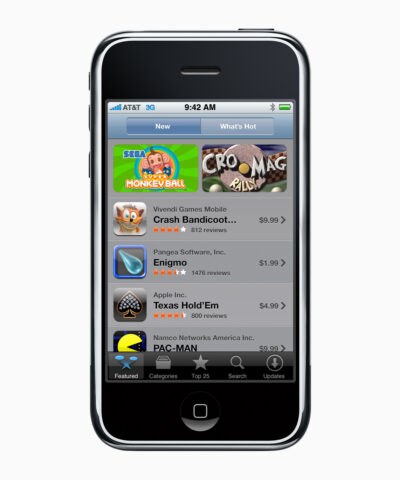
A 30% App Store sales fee seemed less galling in 2008.
Ultimately, this is about money and control, not morals and security. Apple has long argued its App Store commission exists to fund a thriving, healthy marketplace rather than create a profit center. Early on, that was a defensible position, given how dreadful previous mobile marketplaces were. But evidence presented during the Epic Games v. Apple lawsuit blew the argument apart, suggesting Apple’s operating margins hit 75%. Apple disputed the figure, and said the App Store cannot be separated from the wider ecosystem. Yet it refused to provide alternative numbers.
AltStore has since expanded to Japan, suggesting there is some demand and success to be had beyond Apple’s walled garden. But until Apple rips off the band-aid, allowing third-party stores to operate globally and users to sideload apps (even with prominent warnings), all we’ll see is an illusion of freedom. That the company behind arguably the best third-party app store for Mac couldn’t gain a foothold on iOS speaks volumes.