


Which do you prefer: privacy or convenience? Tech giants of late have bet on the latter, ushering in a tech dystopia where we are monitored every waking moment. Products you view on a web page follow you around the internet. Seemingly innocuous home “smart tech” too often leaks private data. Apple has now, apparently, decided it wants a piece of that action by way of the new Apple Watch.
The wearable looks identical to its predecessor, but there are big changes inside. Some are welcome, providing more nuanced monitoring and recommendations for personal health and wellbeing. These are in part driven by machine learning and AI, proving that not everything in that field is inherently bad. What’s important is how technology is used. Which brings me neatly to Live Rewind and Siri Recap.
Instant replay
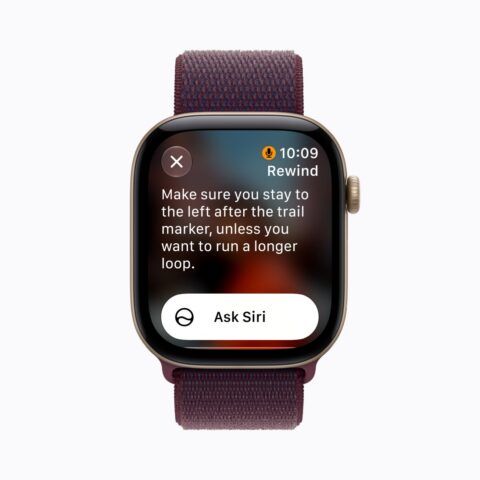

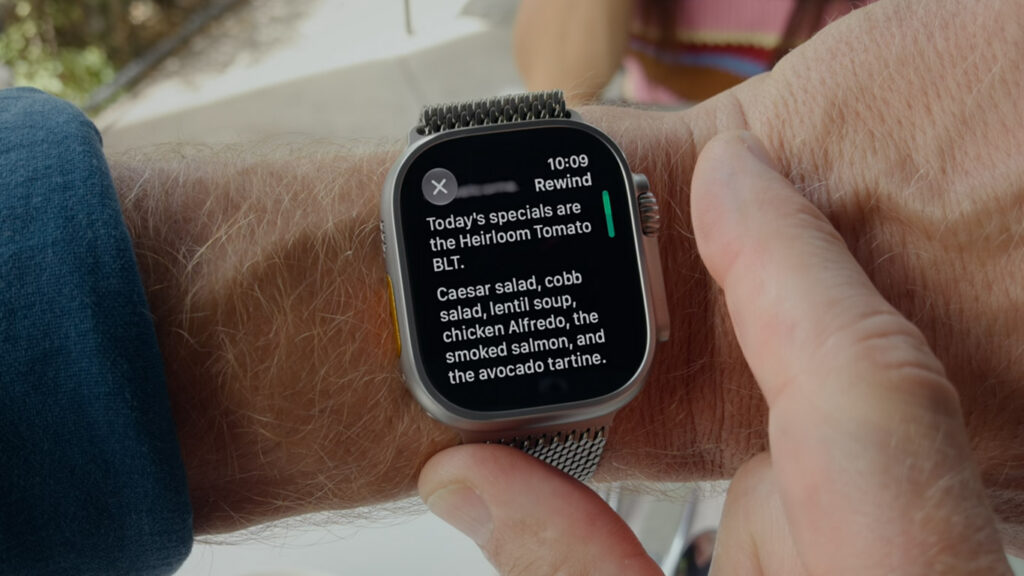
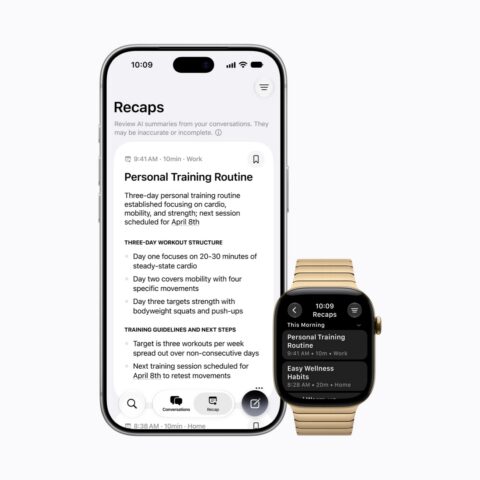
These are, to my mind, Apple’s most misguided features in years. They’re part of a passive and optionally always-on system where your Apple Watch listens to everything being said around you. Double press the Digital Crown and the previous 15 seconds of conversation is shown as a text snippet that can be further investigated by Siri or saved for later. Meanwhile, Siri Recap generates summaries of conversations for later review.
Apple claims these features help you be more present and engaged in the moment. It also argues they don’t contradict the company’s stance on privacy, seemingly on the basis that people’s names aren’t tagged in summaries, no full transcriptions are made, and no raw audio is ever saved or accessible. This means no one can later upload the full text of a conversation or edit and share audio.
But in providing a safety net regarding ongoing conversations, Live Rewind ultimately gives you permission to be less present and attentive, because you can always check something later. It also suggests a gulf between how typical people and the tech industry see and use tech. From an interpersonal standpoint, people are going to get nasty surprises when a companion fiddles with their Apple Watch, and when questioned says they’re just checking what was said a few seconds ago. AI summaries are little better, often peppered with inaccuracies that could create all kinds of problems.
Spy games
Doubtless, we’re going to hear arguments about accessibility. I’ll concede that Sound Recognition coming to Apple Watch is a boon, alerting people who are deaf or hard of hearing to important sounds like sirens, alarms, doorbells, and crying babies. Beyond that, not so much. I’m unconvinced people within the deaf community want to be saddled with widespread knowledge they’re using a device that could potentially create recaps of everything that’s been said around them.
It’s the passive element that’s my main concern. This differentiates Siri Recap from the likes of Live Translation in AirPods. That is about deliberate, intentional, and consensual use within a specific moment. You state (or at least should state) your intent before you use the feature, not after the act.
But Live Rewind and Siri Recap flirt with surreptitious use. The user of the tech is in control. Those around them will often be unwitting subjects, even if Live Rewind plays a chime when it’s used, and the Apple Watch displays an animation indicating the feature is in use. And that makes me worry Apple will head in the same direction with its upcoming AirPods with cameras, and any forthcoming Apple Glasses wearable.
Risky business

These features will be available in beta later this year. That’s just as well, because it gives Apple time to rethink and perhaps even quietly shelve them. If it doesn’t, the risk is poisoning the entire brand, because the assumption will be that every Apple Watch is recording, all of the time. We will see vilification of the device and its users, along with outright bans from certain places.
Apple Watch started out as a joke – an underpowered, overpriced bling accessory to satisfy the desires of a designer who wanted to create a fashion object. But it soon found its place as an excellent health tracker and wrist-based alerts system. Now, Apple risks undoing all that hard work, and for what? Another Black Mirror-style AI feature that no-one asked for and that no-one really needs.
Proponents might argue otherwise, claiming this is just the direction of travel. If Apple doesn’t get on board, it will be left behind. But no company should be normalizing the idea that everyone should be under constant surveillance. Apple used to be better. It always strived for best. Too often now, in battles with other tech giants, it settles for “least worst” – and that’s not good enough.