


One of Apple’s smartest moves was repositioning the Apple Watch from a Jony Ive fashion experiment to a genuine health companion. Sure, the marketing is sometimes a bit much, with its quiet implication that without an Apple Watch, you might meet an entirely preventable demise. But there’s no denying the device’s ability to help improve and safeguard your wellbeing.
For years, I didn’t wear a watch at all. Then I bought my first Apple Watch. Since then, I’ve worn one almost every day. It nudges me to move and stand. And while I sometimes ignore those alerts, I do find them useful. Moreover, the Apple Watch doesn’t ignore me, as I learned during a nasty fall on holiday. When I came to, my Apple Watch was seconds away from calling the emergency services, which was reassuring.
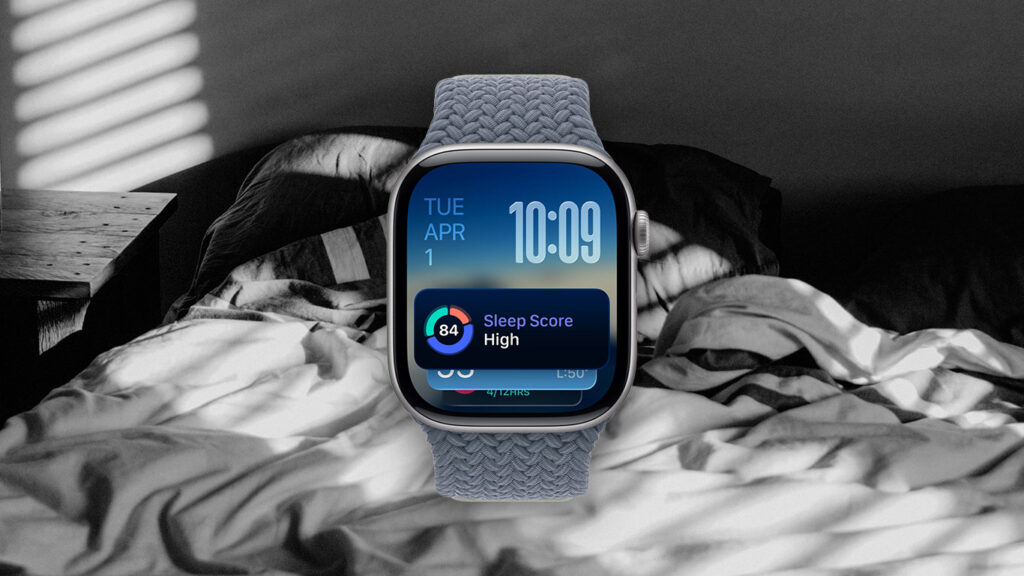
Still, not every new feature inspires such confidence, and one that gives me pause is Apple’s new Sleep Score.
Dream scores


Sleep scoring isn’t new. Other platforms have been doing it for years. But now every Apple Watch back to the Series 6 will attempt to slap a number on your nightly slumber. As revealed at Apple’s September event, the score is drawn from factors such as sleep duration, consistency, interruptions, and time spent awake.
Visually, the score is presented as a familiar donut chart – similar to Activity rings, but more like a pie chart. Your maximum 100 points is divided across three areas: duration (50), bedtime (30) and interruptions (20). Nuggets of context provide advice about how you might improve things, such as by going to bed earlier.
So how does Apple tot up these scores? YouTuber and data nerd The Quantified Scientist discovered that your duration score drops once you go much below eight hours of sleep, or miss out on enough REM or deep sleep. (Curiously, you don’t get penalized for too many sleep hours!) Bedtime scores fall sharply when you go to bed late, but not as much when you turn in early. And interruptions aren’t harshly judged – you can still score full marks with a couple of wake-ups. Just as well, given that we all wake up briefly during most nights.
As to whether these scores are accurate, Apple says it trained the system using 5 million nights of sleep data. But even then, no device can know with absolute certainty whether you’re awake. And as Lifehacker’s Beth Skwarecki found, sleep trackers can disagree wildly with each other. So a pinch of salt may be the best bedtime companion here.
Data fatigue


My bigger concern isn’t accuracy, though – it’s the concept itself. Apple claims “guidance from leading experts, including the World Sleep Society, underpins the scoring approach.” But the psychological impact is easy to underestimate.
I know from personal experience that data can cut both ways. When I once broke my Apple Watch exercise streak, it demoralized me enough to stop exercising for weeks. I’ve found myself frustrated when numbers don’t align with expectations. It’s a trap anyone can fall into: obsessing about numbers regardless of your own objective truth.
For some, of course, Sleep Score will undoubtedly be motivating – a nightly challenge to rest better. But you have to know for sure it won’t turn sleep into yet another thing to measure, compare, and stress over. You might start believing you’ve slept badly, even if you feel fine, because the numbers say so, and then start sleeping badly due to worry – a self-fulfilling prophecy.
To its credit, Apple’s approach takes this into account. Your scores are based on your own historic data. You’re ‘competing’ against your personal baseline rather than a global ideal – a welcome shift from the one-size-fits-all nature that once afflicted Activity rings. Even then, be mindful to not be concerned about any single data point. As the World Sleep Society says you should “focus on trends rather than absolute values of sleep metrics.” And that is just as true for data as how you feel within yourself.
Do all that and you’ll sleep a little easier, whether or not you have a tiny sleep coach strapped to your wrist every night.