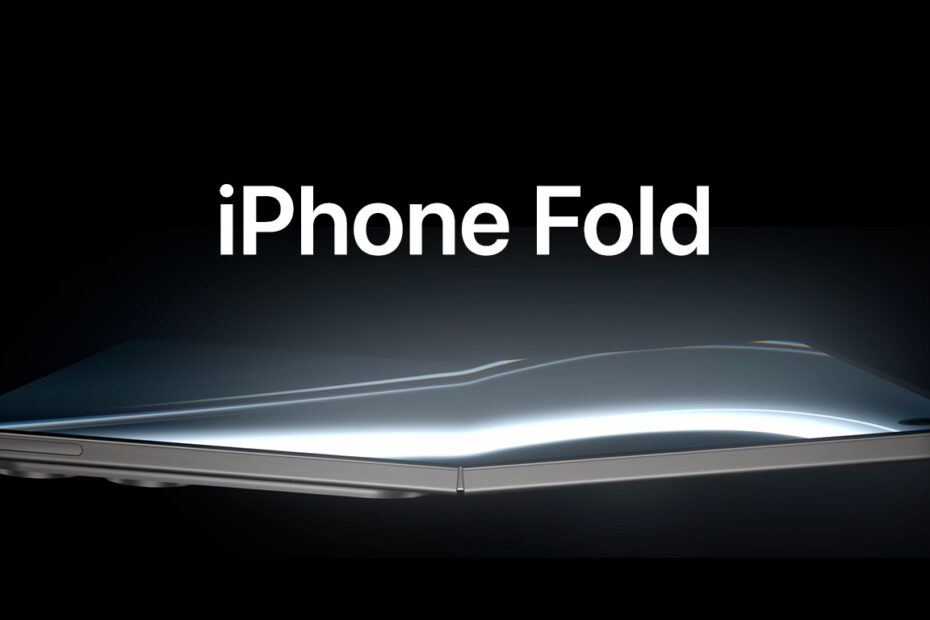

Apple will release a foldable iPhone later this year. It’s the worst-kept secret in tech. But what will it be like? More importantly, what should it be like?
Rather than recycle rumors, I want to focus on expectations. If the iPhone Fold is going to cost a small fortune – and it will – it can’t merely be impressive. It has to feel revolutionary. For me, that means Apple needs to get the following things right.
Durability without heft
Foldables are regularly criticized for being expensive, fragile, and feeling akin to prototypes. That’s a bad look when you’re asking two grand for a phone. By contrast, Apple has a reputation for hardware that lasts. Apple products feel expensive – which is just as well, because they are expensive.

All iPhones feel expensive. The iPhone Fold can be no exception.
So if Apple charges $2,000 for the iPhone Fold, that won’t be a shock. But the iPhone Fold must live up to Apple’s own history. It can’t feel like it’ll break if you so much as breathe near it. There must be credible resistance to dust and water. And all that must come without heft, or this thicker device will feel big and unwieldy rather than magical.
A perfect foldable screen
Screen creases remain the major flaw of foldables. Some are more prominent than others, but even the best end up with a bump that becomes increasingly evident to eyes and fingers alike over time. That’s down to the same part of the display being stressed over and over again when the phone is opened and closed.
At CES 2026, Samsung showed off new folding display tech that redistributes stress across a wider area. Whether that will eliminate the crease or just make it less visible remains to be seen, but “good enough” won’t cut it for Apple.
Rumors also suggest the iPhone Fold will open into an iPad-style aspect ratio rather than having a squarer display that’s more common on Android. That will make the iPhone Fold shorter and wider than you’d expect when closed. But when open, it would be dramatically better for reading, video, multitasking, and more.
Excellent software
Unlike Android tablets, iPads enjoy a genuinely rich ecosystem of high-quality tablet-optimized apps. The bad news is that Apple often hobbles its own software to encourage you to buy more hardware. The iPad itself for years had risible multitasking, because Apple really wanted you to buy a Mac as well.

iPadOS windowing needs to come to the iPhone Fold’s inner screen.
But if you’re going to pay $2,000 for a device that effectively becomes an iPad mini when unfolded, you’d better be able to use it like one. We now know iOS and iPadOS are the same, and so that iPad-like display must have iPad-like windowing. Full-screen apps alone won’t cut it. Additionally, continuity between displays must be seamless, to avoid frustration.
Continuity between screens is probably a given, though – it’s something Apple has been refining for years. But artificially limiting the iPhone Fold to “encourage” you to buy an iPad as well would also be very Apple. I’m uncertain whether the company can resist its own instincts.
Cameras without compromise
The iPhone Air was a striking design wrapped around a long list of trade-offs. And by most accounts, it hasn’t sold particularly well. Chief among the complaints: the camera system, with its sole 48MP snapper.
It’s hard to imagine Apple repeating that mistake with the iPhone Fold. No one expects an amazing telephoto lens – or, indeed, any telephoto lens – because proper optics need space, and the Fold won’t be thick enough. But there’s no excuse for anything less than parity with the iPhone 17’s main and ultra-wide cameras. Ideally, we’d even get something a little extra to justify the price.

iPhone Air: thin. But a not-great camera system.
A complete iPhone, folded or not
No iPhone Fold will live its life permanently open. Which means the fundamentals also matter. It must deliver a full and complete “standard” iPhone experience too.
That means an outer display that’s genuinely useful. The battery has to last a full day. MagSafe should be a given. Biometrics need careful thought – current rumors of an awkward Face ID/Touch ID mix don’t inspire confidence. And if the front screen gets the rumored punch-hole camera, Dynamic Island should remain or it will feel like a regression.
All these things taken together, the iPhone cannot just be an iPhone that folds. That’s not enough. It needs to feel like Apple’s future rather than Android’s present. But whether Apple can overcome its pattern of artificial product limitations is another question entirely.