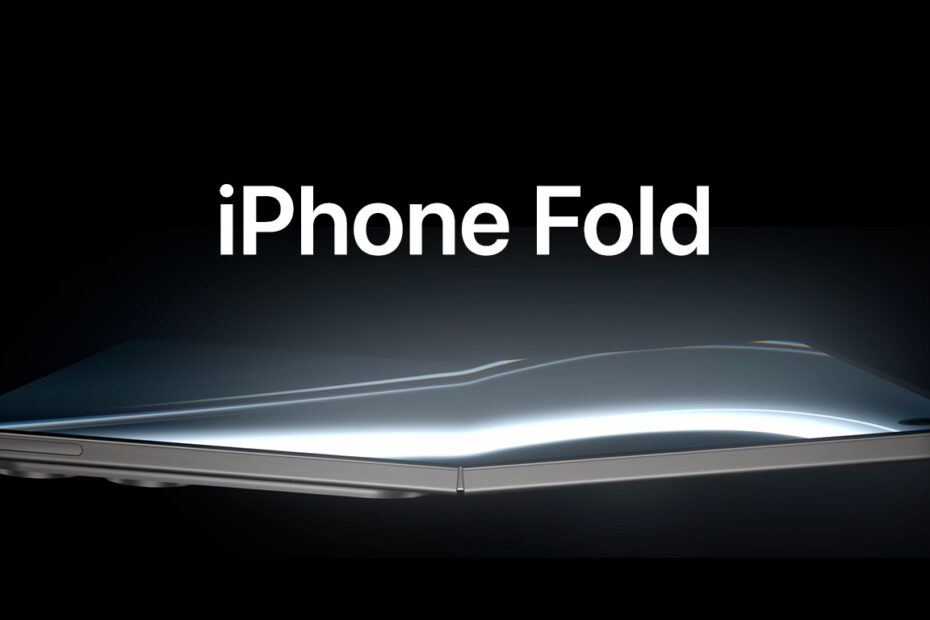

There’s usually a lull in Apple news over the Christmas break, with leaks drying up as the industry switches off for a week or two. This year was different. On Christmas Eve, a major leak dropped that offered an unusually early look at Apple’s most anticipated new device in years: the long-rumored iPhone Fold.

The source was Jon Prosser, a YouTuber and well-known Apple leaker who is already facing legal action from the company over previous disclosures. In a short video, Prosser shared detailed renders of what he claims is Apple’s first foldable iPhone – landing roughly nine months ahead of the device’s expected debut.
Foldable phones themselves are nothing new. Samsung, Google, and others have been refining the format for years, while rumors of Apple working on its own version have circulated almost as long. What’s shifted recently is confidence around timing. Multiple reports now point to 2026 as the year Apple finally feels ready to ship a foldable, after taking its time to address durability, design, and usability in a way that fits its usual standards.
Prosser’s renders show a book-style foldable rather than a flip phone. There’s a smaller external display for quick interactions, paired with a much larger internal screen when unfolded. According to the leak, the outer display measures around 5.5 inches, while the inner screen stretches to roughly 7.8 inches. In practice, that puts it somewhere between an iPhone and an iPad mini – compact when closed, but far more spacious once opened up.

The overall proportions are also notable. Folded shut, the device appears shorter and wider than a regular iPhone, prioritizing pocketability without feeling tall and narrow. The camera layout follows recent Apple trends too, with a dual-camera setup housed in an elongated bump similar to the iPhone Air, and a separate LED flash.
One of the more eye-catching claims is thickness. Prosser suggests the device would measure around 9 mm when closed, implying each half is roughly 4.5 mm thick. If accurate, that would make it exceptionally slim for a foldable, even by Apple’s recent standards.
You can see the renders for yourself in Prosser’s brief video walkthrough, which covers the design and claimed specs in more detail. As ever, it’s worth stressing that none of this is confirmed, and details can change before a product ever ships.

Assuming a foldable iPhone does arrive in 2026, price will likely be the biggest hurdle. Most estimates place it well north of $2,000, firmly positioning it as a premium, niche device rather than a mainstream replacement for the standard iPhone. Still, if these leaks are close to the mark, consumers will have plenty of time to get used to the idea before opening their wallets.