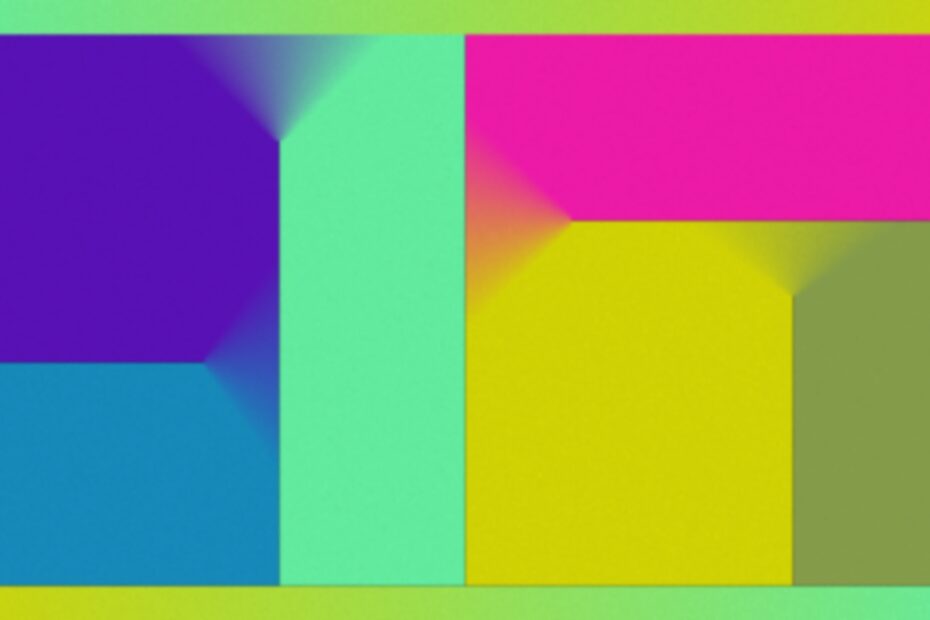

The latest entry in our classic iPhone and iPad app series felt like having a tiny Brian Eno living inside your device.

What was Brian Eno : Reflection?
An ambient experiment created by generative music pioneer Brian Eno alongside musician and software designer Peter Chilvers. Eno described it as the most sophisticated of his works in the field, and the result, released in 2017, is best understood as a piece of living art.
Why was it a classic?
Because it distilled Eno’s philosophy into its purest form. Instead of a finite, fixed piece of audio, Reflection offered a continuous stream of sound and imagery that subtly changed over time, responding to the hour of the day and even the season. Eno compared it to “sitting by a river: it’s always the same river, but it’s always changing.”
Where is it now?
The app is still on the App Store as a universal app for iPhone, iPad, and Apple TV, and it also runs on Apple Silicon Macs. Several other Eno/Chilvers creations remain available too. For traditionalists, Eno also released a 54-minute “excerpt”. But, by definition, that version can only ever be a snapshot of Reflection – a recording of the river, rather than the river itself.
Visit the Generative Music website or get Brian Eno : Reflection ($31/£30) from the App Store.
Q&A: inside Brian Eno : Reflection – music and art that never ends
To understand how Reflection came to life, and why it still feels like nothing else in the world of apps or recorded music, we spoke to co-creator Peter Chilvers about translating Eno’s ambient philosophy into software.
What was the genesis of the app?
Peter: Reflection started as a long-form ambient piece Brian had been writing and refining for some time. He’d planned to release it as an album, but then we were offered an unusual commission to create an app for an event. Brian thought Reflection would work as a generative app – something that could play endlessly, with subtle variations. The commission fell through, but we both felt the idea was strong enough to stand on its own, and so continued to develop it.
You’d collaborated before on audio/art apps. What made Reflection different?
Those earlier projects were conceived as apps first, arriving from a back-and-forth exchange of ideas. Bloom was a software idea of mine, built around Brian’s sound and musical approach, and then sculpted into something richer by both of us. Scape drew on generative music ideas we’d been exploring over the years. These and our other apps were designed to enable user interaction with an artwork, filtering output to their own tastes.
Reflection was completely different. The work already existed in a solid form, and we had distinct roles, with Brian as the composer, and me as the architect. My job was to find ways to extend what Brian had created beyond the bounds of a fixed composition.
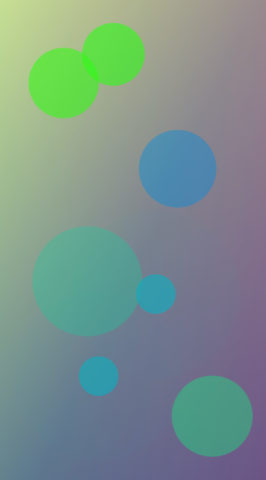
Bloom for iPhone.
So this time, it was something users would live with rather than actively “play”?
Exactly. From the start, we knew there would be no interactivity. This would be a piece of music the listener surrendered to. That was liberating. Complex artistic ideas are often easy to implement. It’s presenting a simple interface that’s tricky. In this case, the only interactions were a pause button and a sleep timer.
My main challenge was to reverse-engineer Brian’s composition processes and understand the logic behind the piece – what ideas were repeated, how they varied and combined – and turn that into a “living” system that produced subtle differences during each play.
What did the format enable that traditional recordings do not?
Most recorded music has a beginning and an end, and some sort of progression between the two. Ambient music is more like a landscape you live in. We did, however, impose a slow-moving structure across the day. It “wakes up” in the morning, with new sounds chiming in at around 7am. Slowly, the music becomes more complex through the day, thinning out a little in the evening. Overnight, it becomes sparser, until around dawn, when there are as many silences as notes.
We also mapped changes across the year, dividing it into four seasons. Each has its own slightly different key and character, along with some sounds that don’t appear at other times of the year.
This approach has a lot in common with the natural world. If you walk through the same countryside at different times, you’ll hear many changes. Reflection works in a similar way. Try doing that with vinyl!

The minimal Reflection interface.
How did you approach the visual component of Reflection?
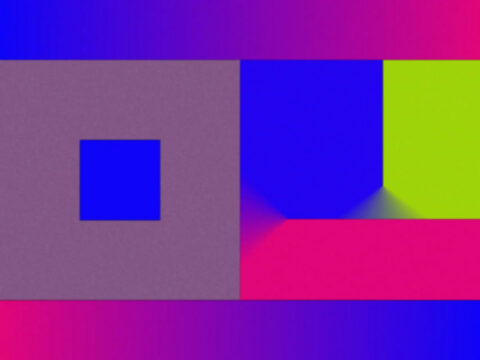
Brian was a visual artist before he was a musician, and for decades has worked with images that slowly change over time, using analog and digital approaches. He’s created many “light boxes” – simple, almost Mondrian-like images that change colour at a speed invisible to the eye. The visuals for Reflection were my attempt to emulate that approach.
The app works on iPhone but can fill a room via Apple TV. Did catering for such different contexts influence your approach?
The Apple TV App Store had only just arrived when we were writing Reflection, and it felt like an excellent home for it. On a TV, it’s like a large artwork sitting in the corner of the room. I know some people who have a TV purely to run it 24/7.
On iPhone, I suspect most people listen using headphones. Even then, there’s something reassuring about periodically checking in with the visual, and knowing it’s still there, changing in the background, when the app is off-screen.
When macOS allowed iPad apps to run with minimal changes, that provided another outlet for Reflection. It looks great filling a laptop screen, and the music is easy to work alongside. “As ignorable as it is interesting,” to quote Brian!

The sleep timer in Reflection.
What are your favourite moments in Reflection?
Parts few people hear, in the early hours between about 4am and 6am. As an insomniac, I love the extreme sparseness and occasionally set it running on my iPhone and iPad at the same time.
Do you think of Reflection as a finished artwork?
Although it’s continuously changing, we fixed the rules governing Reflection at the end of 2017, once the first four seasons had played out. Since then, it’s just had maintenance updates – and I suspect that’s how it will stay. That said, I’m very interested in Apple’s spatial audio, and I’d love to move the music into three dimensions if there’s an opportunity.
We did discuss adding sounds tied to rare astronomical events, but never got around to it. I love the idea of a sound appearing for one moment every few decades, leaving the listener wondering if they imagined it. Halley’s Comet is next due in 2061, so I’ve got a bit of time to get it working!