
This year’s iOS reveal was a strange one. At WWDC, we’re usually overwhelmed with new iOS features. But iOS 27’s headline changes mostly amounted to interface refinements, child safety features, and improvements to Siri.
Most are fine. Good, even. But as someone who dabbles in the “other side”, there are still some major features that Apple refuses to give the iPhone that I wish it would “steal” from Android.
App sideloading
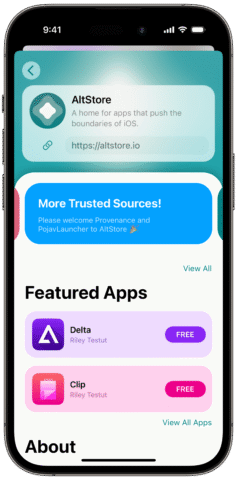
AltStore now exists in a few countries. But you should be able to install iPhone apps from anywhere, regardless of where you live.
Apple is embroiled in regulatory scraps around the world over the App Store being the sole official way to get apps onto the iPhone. In a few jurisdictions, third-party app stores now exist, but they’re few in number and hardly overflowing with apps. And the idea of loading apps from anywhere isn’t part of the conversation at all.
Yet it’s easy to forget how strange the concept of a central “app store” is. It’s a holdover from the pre-iPhone era: polished by Apple, sure, but still locking you into a single point of purchase. That suits Apple, because the App Store became a money spinner. But iPhones are pocket computers, which makes it absurd that you can’t install software from wherever you like, as you can on a Mac.
Android doesn’t have that limitation. And although Google is adding extra steps to sideloading this year, the capability isn’t going away. Android users will still be able to load apps from multiple sources, while developers can sell directly to users. It’s unlikely Apple will follow suit, unless forced, which feels particularly galling given that iPhones now cost as much as laptops.
Replacement launchers

ES-DE makes an Android phone feel like a console, which is infinitely better than the iPhone’s launcher.
Although I own a couple of Android smartphones, several of my Android devices are game consoles from Retroid. They’re essentially Android phones without the phone bit, but with the physical controls of a handheld console.
By default, they use standard Android home screens. But it’s trivially easy to swap in something more appropriate, such as ES-DE for launching games. Naturally, that app works well on a standard Android phone too. And there are also loads of other launchers, from wildly customizable replacements to minimalist interfaces designed to make your phone less distracting.
Apple has (very slowly) loosened its grip on default apps, for example by letting you choose your favorite web browser or email client. But its app launcher, Springboard, remains off limits. It’s ironic: you can replace some apps you use to do things, but not the one you use to launch them.
Desktop mode

Imagine your iPhone being able to show this on an external display. (You’ll need to, because Apple won’t let you have it.)
In 2025, a “tech geek” showed that iPadOS and iOS are effectively one and the same. Apple decides which interface a device gets. There’s ultimately nothing stopping your iPhone from running iPad software other than Apple not wanting it to. And the MacBook Neo runs a chip from 2025’s iPhone, showing just how much power Apple can squeeze from mobile silicon.
Yet there’s still no desktop mode, which isn’t the case on Android. Plug an Android 16 device into an external display, add a keyboard and pointing device, and you have something that approximates a laptop. Sort of. Android’s main problem is how few apps are optimized for large displays. Many remain trapped in phone-sized windows.
Apple already solved this problem. Plug an iPad into an external display and you have something not unlike a Mac. An iPhone is powerful enough to do the same, but Apple’s business model is built around selling you several devices for specific jobs, rather than one device that does everything.
This is also unlikely to change. The result is that the iPhone Fold/Ultra will cost as much as an expensive laptop while being more limited than the most basic iPad – let alone a Mac.