
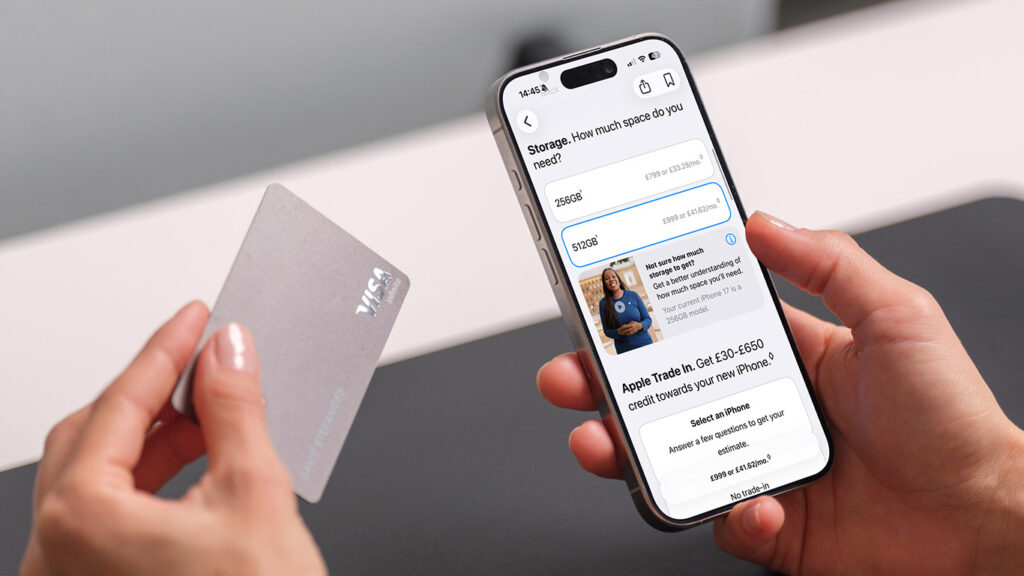


Buying a new iPhone or iPad is mostly straightforward, but there’s still one decision that causes a lot of hesitation: how much storage to choose. Paying for extra space can add a surprising amount to the price, and you can’t add more later, so it’s worth putting in some thought to make the right decision.
Most new iPhones now start at 128GB, with higher tiers climbing to 512GB or 1TB depending on the model. iPads span an even wider range. For many people, the base capacity is absolutely fine. If you mainly use your device for messaging, browsing the web, and streaming music or video, storage fills up slowly. Streaming doesn’t permanently use space unless you download content for offline use, and everyday apps are rarely an issue on modern devices.
Extra storage starts to matter if you take lots of photos and videos, download media to watch offline, or play lots of premium games. iPads used for creative work or as lightweight laptop replacements are also more likely to benefit from extra headroom, although depending on your workflow you might be ok with an external storage drive for large-format files and media.
Rather than guessing, the best approach is to check how much storage you’re already using on your current device (assuming you have one). Open the Settings app and go to General, then iPhone Storage or iPad Storage. At the top of the screen you’ll see exactly how many gigabytes you’re using currently.
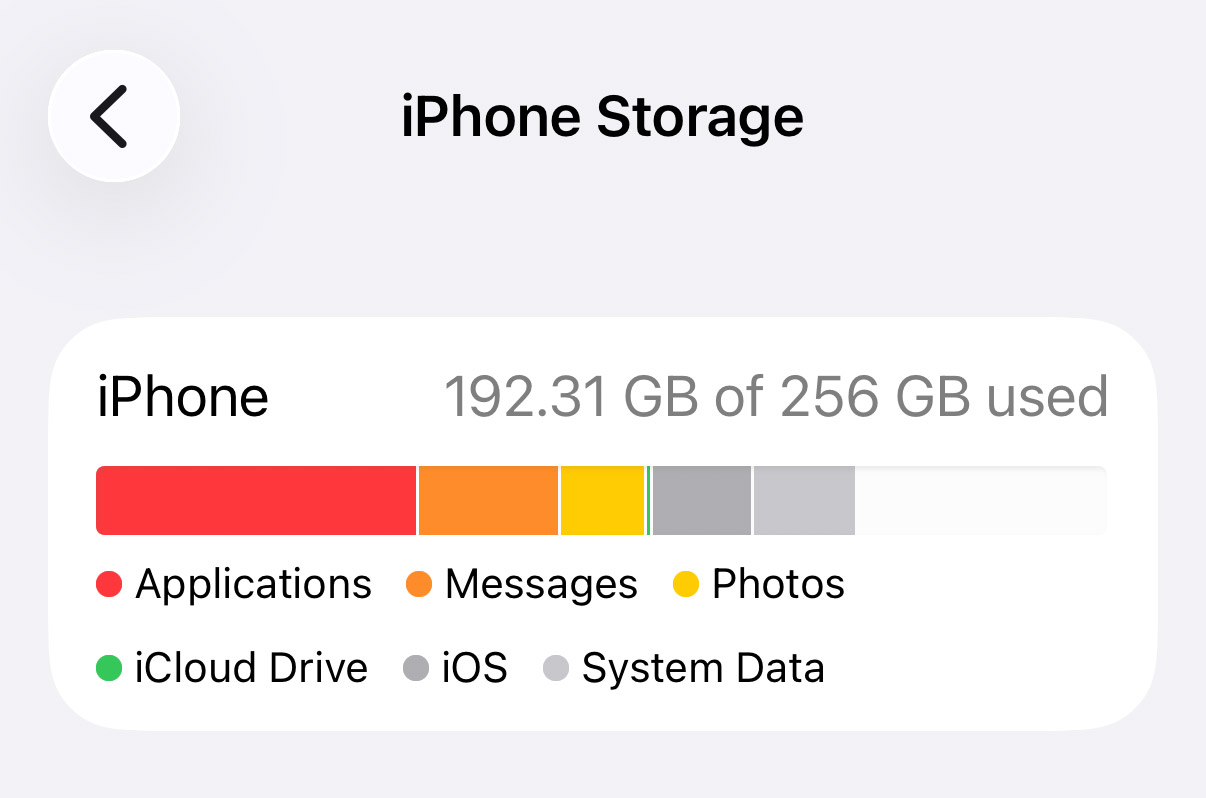
Use that number as your guide, and choose the storage that will give you a bit of breathing room for expansion. Choosing a capacity smaller than what you already use will feel like an immediate downgrade, while paying for maximum storage rarely makes sense if you’re barely filling what you have now.
If you’re close to the limit but want to save some money, follow our quick tips for reclaiming storage space or try clearing your app caches. It might just save you a couple hundred bucks!
One last thing to keep in mind is that Apple occasionally bumps up the base storage across its lineup, which can lead to some slightly odd pricing. When that happens, older models often lose their higher storage options altogether. For example, once the iPhone 17 launched with 256GB as standard, Apple stopped selling storage upgrades on the iPhone 16, since higher-capacity versions would have ended up costing more than the newer model.