


Every three months, Apple holds a conference call to tell everyone how much money it’s made. It’s like a keynote for business wonks. During the most recent one, the company revealed its quarterly revenue was a colossal $143.8 billion. To put that in perspective, it’s roughly equivalent to the GDP of Norway or Singapore. Apple is a long way from being the company that almost winked out of existence when it couldn’t dig itself out of a hole. (Now, it would just clamber up the cash pile.)
Apple making money is a good thing if you enjoy using its products and want the company to not just survive but thrive. However, I’m less excited about how Apple increasingly makes that money: advertising. Apple used to poke fun at rivals peppering user experiences with ads, and yet today it’s doing exactly that, while still claiming to be better because it respects user privacy.
As if being “least bad” rather than “best” isn’t enough, Apple is also breaking the deal it made with people who bought its products. You paid a little extra for Apple gear because you weren’t the product. Now you’re being sold to advertisers due to Apple’s quest for infinite profits. And nowhere is this more obvious than in the App Store.
Not appy
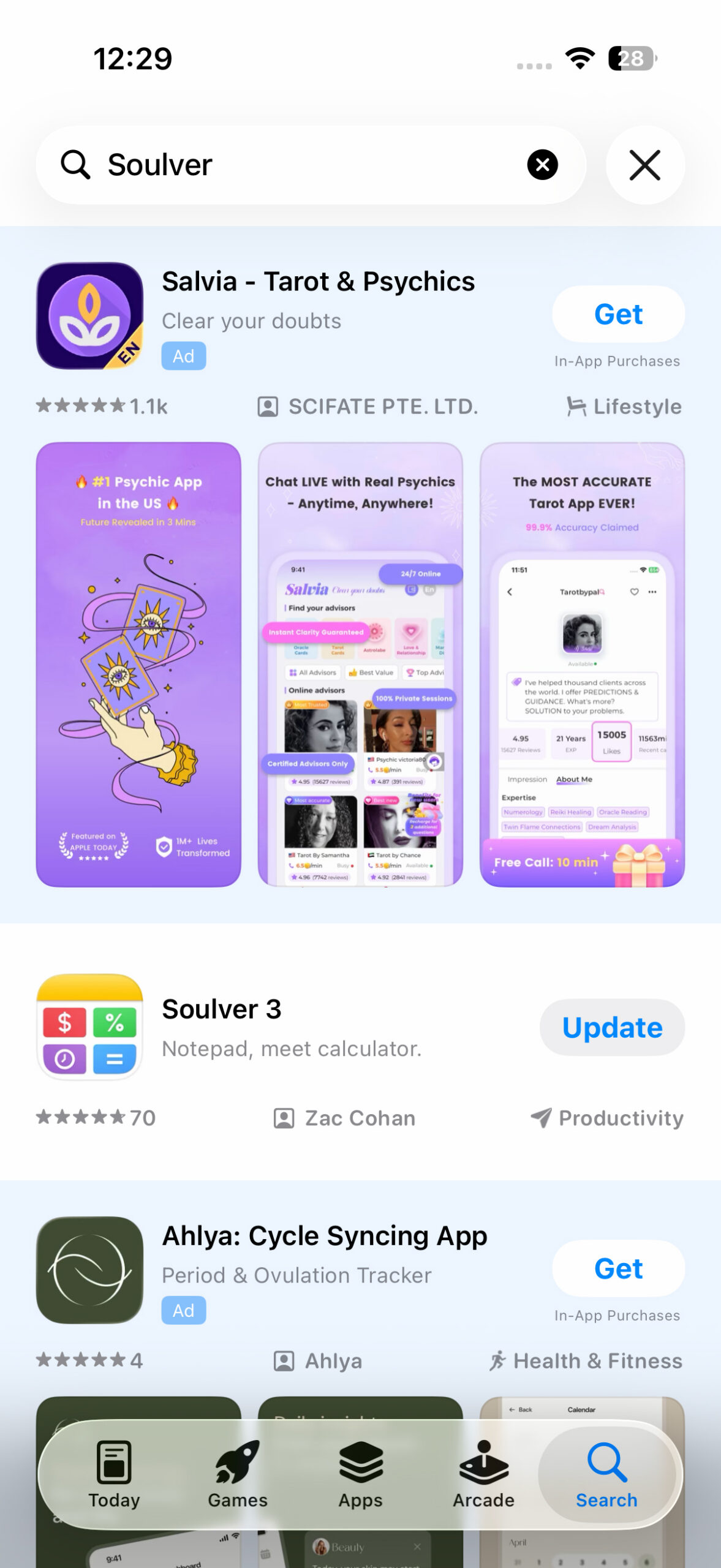
Ads now dominate App Store search results to an absurd degree.
It’s easy to forget how revolutionary the App Store was. Pre-iPhone, buying apps and games for phones could be a nightmarish experience. Apple made things easy for app creators and users alike. The introduction of adverts, however, changed everything. They’re most problematic in search results, where they take up so much space that they dominate the screen.
On iOS 26, this has been taken to comical levels. Apple now often squeezes two ads onto the search results page, sandwiching a tiny slot for an organic result between them. It’s like someone at Apple observed how Google degraded search engine results and decided to take that to the extreme.
Search for Bluesky and you’ll likely get a Truth Social ad above it. Looking for Instagram? You may see Google Gemini first, which isn’t even the same kind of app. When I searched for Soulver, a notepad calculator, it was wedged between ads for tarot and ovulation tracker apps. As for PCalc (a traditional calculator), that ended up buried beneath two ads and an organic result for a movie tracker, forcing me to scroll to spot it.
Ad enough

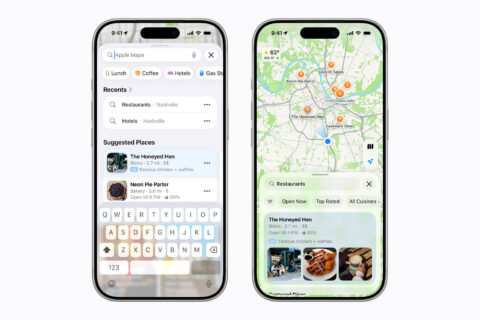
Ads are coming to Apple Maps. “Finally,” said no one.
There are multiple problems here. One is that Apple is encouraging brands to snap up search terms, hijacking popular words or the names of rivals, so their products can sit above the competition. I’ve seen smaller developers suggest this feels like blackmail, and they’re not in a position to pay.
More broadly, unless an ad happens to match what you were searching for – which is vanishingly rare – Apple is creating a distraction, attempting to steer you away from what you wanted. This isn’t for your benefit. The only winners here are advertisers and Apple shareholders.
Clearly – and sadly – this strategy is working. First-party ads now litter previously free apps like Pages and Numbers, as Apple attempts to upsell you to Apple Creator Studio. And, per its Apple Business press release, ads are heading to Maps.
The last of those is ironic, really, because all this points to a company that has lost its sense of direction. Apple needs to rediscover its philosophy of old before it becomes yet another tech company that blatantly prioritizes shareholders over the people who actually use its products.